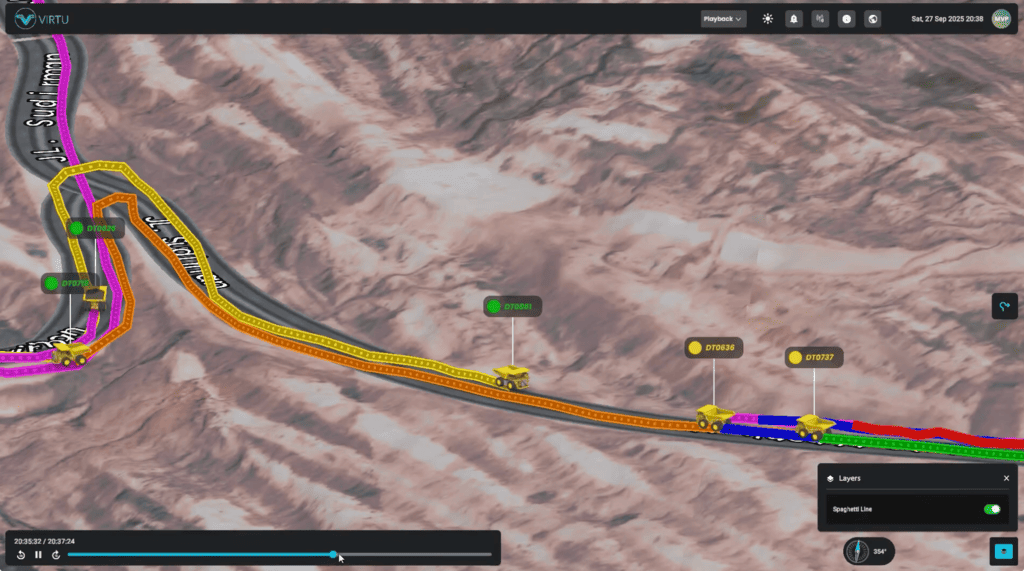
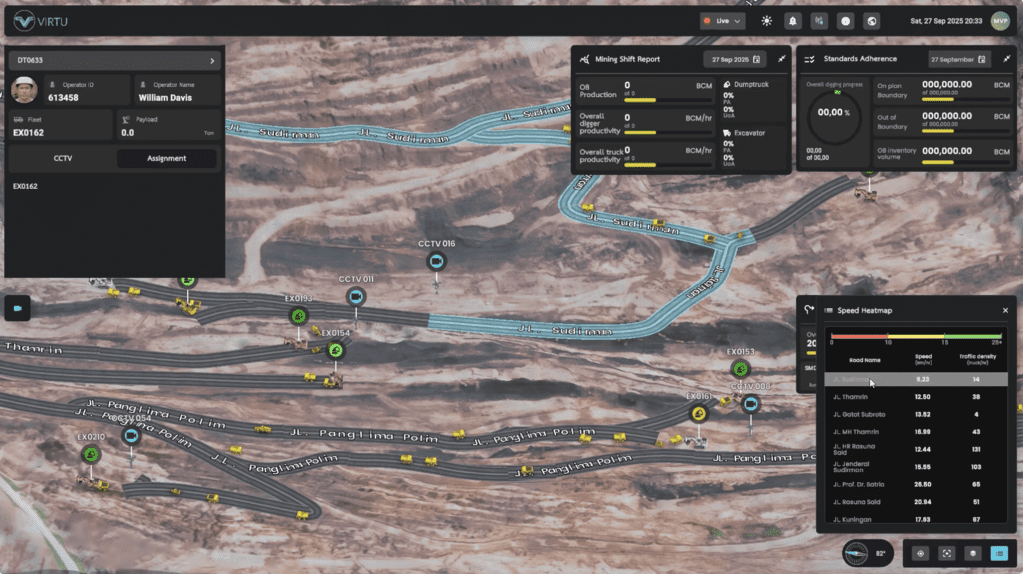
There’s a common misconception about Digital Twin technology. Many people hear the term and picture a fancy 3D visualization — something you look at in a boardroom presentation and then never interact with again.
That’s not what a Digital Twin is. Not even close.
A Living, Breathing Replica
A Digital Twin is a live virtual replica of a real-world object, system, or process. The key word is “live.” It’s connected to the actual system it represents, receiving real-time data and continuously updating to reflect what’s happening right now. It tracks history, mirrors current state, and enables teams to monitor, analyze, and make predictions based on actual performance — not estimates.
Think of it as a working twin that never sleeps, never stops collecting data, and is always ready to answer the question: “What’s actually going on?”
Four Things a Digital Twin Does for You
The practical applications of Digital Twin technology center around four core capabilities that address real business problems.
The first is 3D visualization. Instead of interpreting spreadsheets and reports, decision-makers can see an intuitive overview of their assets and systems in three dimensions. Patterns and problems that would be invisible in a data table become immediately obvious when visualized spatially.
The second is real-time monitoring and alerts. A Digital Twin delivers complete, contextual information at any moment. When something changes — equipment performance drops, a process runs outside acceptable parameters, a safety threshold is crossed — the system flags it immediately. No waiting for end-of-day reports.
The third is historical playback and auditing. Every state the system has ever been in is recorded with a timestamp. Teams can replay events to understand exactly what happened, when, and in what sequence. This is invaluable for incident investigation, compliance auditing, and continuous improvement.
The fourth is predictive maintenance and planning. By analyzing patterns in historical and real-time data, a Digital Twin can identify early warning signs of equipment degradation or process inefficiency — before they become expensive problems. Teams shift from reactive maintenance to proactive planning.
Real Results Across Industries
The business case for Digital Twin is no longer theoretical. Organizations that have deployed the technology are reporting concrete outcomes. Decision-making cycles are 30% faster, according to research by GE Digital. Revenue streams have grown by 15%, per Accenture’s analysis. Team productivity has jumped by 49%, with operational risks falling by 46%, based on findings from Hexagon’s 2025 Digital Twin Trends Report.
Perhaps most striking: a 50% reduction in unplanned outages, documented by PwC. In industries where downtime means lost production, lost revenue, and damaged relationships, that number is a game-changer.
Not a Tool for the Future — A Tool for Now
Digital Twin is no longer an emerging technology reserved for well-funded R&D departments. It’s a deployable, practical solution that companies across manufacturing, mining, logistics, and infrastructure are using today to get a competitive edge.
For businesses that still rely on periodic reports and manual site visits to understand what’s happening in their operations, the question isn’t whether Digital Twin is worth exploring. The question is how much longer they can afford not to.